



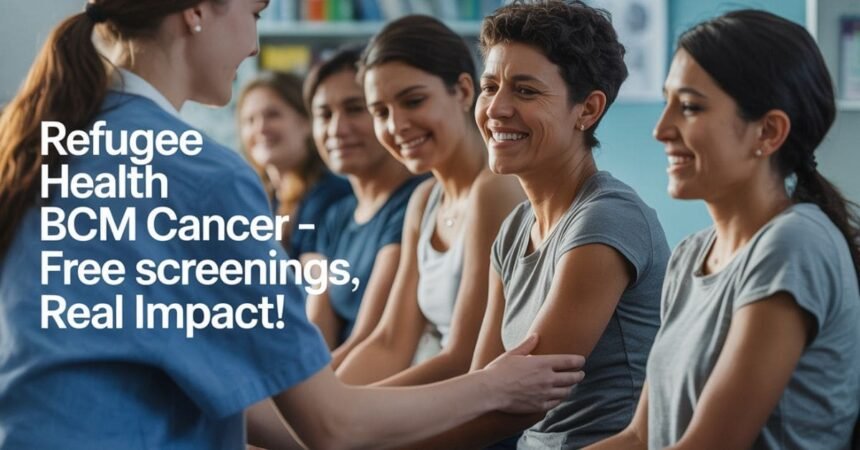
Across the globe, millions of refugees flee conflict, disaster, and persecution in search of safety. But even after crossing borders, many face an invisible threat—one that doesn’t stop at checkpoints or borders: cancer. For these displaced populations, the journey toward healing is often blocked by financial, cultural, and systemic barriers. At the heart of the solution lies Baylor College of Medicine (BCM)—a leader in refugee healthcare, pioneering innovative approaches to cancer prevention, diagnosis, and treatment.
In this article, we explore how BCM is improving refugee health outcomes through early detection, culturally competent care, and groundbreaking research.
The Overlooked Health Crisis Among Refugees:
Refugees leave everything behind in pursuit of survival. Unfortunately, healthcare is often left behind too. When it comes to non-communicable diseases like cancer, the stakes are even higher.
Cancer in refugee populations is often underdiagnosed and undertreated. Delayed access to medical services, language barriers, trauma, and lack of screening services mean many are diagnosed at later stages, when treatment is less effective and more expensive.
Common challenges include:
- Lack of access to cancer screening
- Limited insurance coverage
- Psychosocial trauma
- Poor awareness of cancer symptoms
- Fear of stigma or fatalism in home cultures
These hurdles make one thing clear: Refugee cancer care requires a different kind of approach—one built on accessibility, empathy, and innovation.
BCM’s Role in Supporting Refugee Health and Cancer Care:
Baylor College of Medicine, based in Houston, Texas, has long been a hub for cutting-edge healthcare research and service. In recent years, BCM has taken a proactive stance in addressing the intersection of refugee health and cancer care.
With Houston being home to a large refugee and immigrant population, BCM’s involvement has been both timely and impactful. Through clinical programs, community partnerships, research studies, and telemedicine, BCM is working tirelessly to ensure no one is left behind in the fight against cancer.
Cancer in Refugee Populations – A Growing Concern!
Many refugees arrive in the U.S. with undiagnosed or advanced-stage cancers. Why? Because in their home countries, regular cancer screenings like mammograms or Pap tests might not exist or be accessible. Moreover, awareness about cancer symptoms may be low, and stigma can prevent people from seeking care even if they suspect something is wrong.
Some of the most common types of cancer seen in refugee populations include:
- Breast cancer
- Cervical cancer
- Colorectal cancer
- Liver cancer
- Lung cancer (particularly among older male refugees who smoked)
BCM addresses these needs head-on with targeted interventions and partnerships with local cancer centers.
Screening And Early Detection – The First Step!
Screening is the frontline in the battle against cancer. The earlier a cancer is detected, the better the chances of survival and recovery. BCM ensures that newly arrived refugees are screened for major cancers based on their age, gender, and risk factors.
Services include:
- Pap smears and HPV testing for cervical cancer
- Mammograms for breast cancer
- Fecal tests and colonoscopy referrals for colorectal cancer
- Liver function tests and ultrasound for those with hepatitis B or C
These programs are often provided at low or no cost, and conducted in multilingual formats to increase participation and understanding.
Overcoming Barriers – Making Cancer Care Accessible For Refugees!
For many refugees, seeking medical attention—especially for something as serious as cancer—can feel overwhelming. Multiple, interconnected challenges often lead to delayed or avoided care, including:
- Fear of high medical expenses
- Inability to miss work without pay
- Childcare responsibilities at home
- Language barriers that hinder communication
- Mistrust of unfamiliar healthcare systems
Recognizing these realities, Baylor College of Medicine (BCM) takes a compassionate and practical approach to bridge these gaps in care:
- Professional interpreters are available in key refugee languages such as Arabic, Dari, Pashto, Swahili, and others, ensuring clear and respectful communication.
- Low-cost and no-cost healthcare options help alleviate financial stress and encourage patients to prioritize their health.
- Patient navigators assist refugees in understanding their appointments, treatment plans, and follow-ups—offering guidance every step of the way.
- Partnerships with trusted community organizations foster cultural understanding and build trust between healthcare providers and refugee families.
By placing the individual at the center of care, BCM fosters long-term relationships and empowers refugees to engage confidently in their cancer treatment journey.
Affordable and Accessible Cancer Treatment Options:
One of the biggest concerns for refugees is cost. Even with public aid, the cost of chemotherapy, radiation, and surgery can be overwhelming.
BCM tackles this issue by:
- Connecting refugees to charity care programs
- Enrolling eligible patients in clinical trials
- Partnering with nonprofits to offer financial support services
- Offering Gold Card enrollment support through the Harris Health System
These efforts are vital in preventing treatment abandonment due to cost—a common outcome when patients can’t afford their full course of therapy.
From Diagnosis to Treatment – A Lifeline!
For refugees diagnosed with cancer, the path ahead can feel overwhelming. They must navigate not only a new country but also a complicated medical system. BCM works closely with MD Anderson, Baylor St. Luke’s Medical Center, and Ben Taub Hospital to connect refugees to oncologists, surgeons, radiologists, and support teams.
BCM’s Support Includes:
- Coordinating appointments
- Helping refugees apply for the Harris Health Gold Card
- Arranging transportation for treatment
- Providing counseling and emotional support
- Assisting with nutrition programs and housing if needed
The goal is to treat not just the cancer, but the whole person—considering their physical, emotional, social, and cultural needs.
Community Partnerships Make It Possible:
BCM doesn’t do this work alone. It collaborates with a wide network of partners including:
- The Alliance for Multicultural Community Services
- Boat People SOS
- Interfaith Ministries for Greater Houston
- Texas Department of State Health Services
- Catholic Charities
These organizations help identify cancer risks, conduct outreach, and ensure refugees don’t fall through the cracks after resettlement.
Training Tomorrow’s Healthcare Leaders:
An important but less visible part of BCM’s refugee work is medical education. Students and residents learn firsthand how to provide culturally competent care to diverse populations.
Courses, seminars, and clinical rotations on global health, refugee care, and health equity are shaping a new generation of doctors who are better equipped to serve vulnerable groups.
Impact That Matters – BCM’s Mission to Save Lives!
Thanks to these combined efforts, thousands of refugees in the Houston area now have access to lifesaving cancer services that would have been unimaginable in their countries of origin.
Outcomes include:
- Increased cancer screening rates
- Earlier diagnoses and better survival chances
- Reduced emergency room visits for late-stage cancer
- Improved patient satisfaction and engagement
BCM regularly tracks and publishes data to show the effectiveness of its refugee health interventions. These efforts help guide future improvements and inspire similar models across the U.S.
Barriers That Still Persist — Hidden Challenges!
While the progress made by BCM is commendable, it’s important to recognize the persistent challenges that still prevent many refugees from receiving timely and effective cancer care.
Key ongoing barriers include:
Legal Status and Healthcare Ineligibility: Many refugees and asylum seekers arrive without proper documentation, leaving them ineligible for public healthcare programs.
Language and Cultural Disconnect: Without professional interpreters or cultural training, miscommunication can lead to misdiagnoses, missed appointments, or non-adherence to treatment.
Lack of Health Literacy: Many refugees are unfamiliar with cancer as a disease. They may not recognize symptoms or understand the need for ongoing care.
Solutions to Improve Refugee Cancer Care:
There is no single solution—but several strategic actions can improve outcomes across the board:
1. Expand Community-Based Screening Programs:
Mobile clinics in refugee neighborhoods can bring early detection to those who need it most.
2. Simplify and Broaden Insurance Enrollment:
Refugee-specific or subsidized health plans can eliminate one of the biggest barriers to care: affordability.
3. Train Providers in Cultural Competence:
Doctors and staff should be equipped to:
- Communicate effectively across cultures
- Understand trauma-related behaviors
- Respect gender sensitivities (e.g., modesty during exams)
4. Strengthen Interagency Partnerships:
Deeper collaboration with organizations like UNHCR, IRC, and local nonprofits can create a seamless safety net for refugee patients.
Human Stories Behind the Statistics:
Behind every program are real people—like Fatima, a Syrian refugee mother of four who discovered a breast lump shortly after resettling in Houston. Through BCM’s outreach program, she received a mammogram, biopsy, and was enrolled in a clinical trial that covered her treatment.
Fatima now volunteers with the refugee health education team, helping other women understand the importance of early screening.
Stories like hers show that access is not just about medicine—it’s about dignity, inclusion, and survival.
Looking Ahead – Building a Healthier Future for All!
The work being done at BCM is not just about healthcare—it’s about dignity, compassion, and equity. Refugees have already endured so much by the time they arrive in Houston. The last thing they should have to worry about is whether they can see a doctor or get treated for cancer.
BCM’s model proves that it is possible to provide high-quality care to underserved communities with the right partnerships, planning, and commitment.
FAQs on Refugee Health and BCM Cancer Care:
1. What makes cancer care especially challenging for refugees?
Refugees often face multiple barriers such as limited access to screenings, financial hardship, lack of insurance, language differences, and unfamiliarity with healthcare systems. These challenges delay diagnosis and reduce the chances of successful cancer treatment.
2. How is Baylor College of Medicine (BCM) helping refugees with cancer?
BCM provides comprehensive support, including free or low-cost screenings, access to clinical trials, financial assistance, interpreter services, and patient navigation. It also collaborates with local and international partners to ensure holistic cancer care for displaced populations.
3. Can refugees receive cancer treatment if they are undocumented?
Yes, BCM and its healthcare partners do not deny care based on immigration status. They help patients access charity programs, the Harris Health Gold Card, and other supportive services regardless of documentation.
4. What types of cancer screenings does BCM offer to refugees?
BCM offers screenings for cervical, breast, liver, and colorectal cancer. Services include Pap smears, HPV testing, mammograms, fecal occult blood tests, colonoscopies, and liver ultrasounds—based on age, gender, and medical risk.
5. How does BCM address language and cultural barriers in cancer care?
BCM provides professional interpreters in major refugee languages (Arabic, Dari, Pashto, Swahili, etc.), employs culturally trained staff, and partners with community groups to educate and build trust among refugee families. This ensures patients fully understand their diagnosis, treatment, and care plans.
Final Thought:
The link between refugee health and BCM’s cancer care initiatives demonstrates both the complexity and urgency of equitable healthcare delivery. While significant progress has been made, systemic barriers continue to hinder access for displaced individuals. BCM’s leadership in research, community engagement, and innovative care models is commendable—but to create lasting change, collaboration between policymakers, nonprofits, and healthcare systems is essential.
Cancer doesn’t discriminate. Healthcare shouldn’t either.
Latest Post:




Recent Comments