



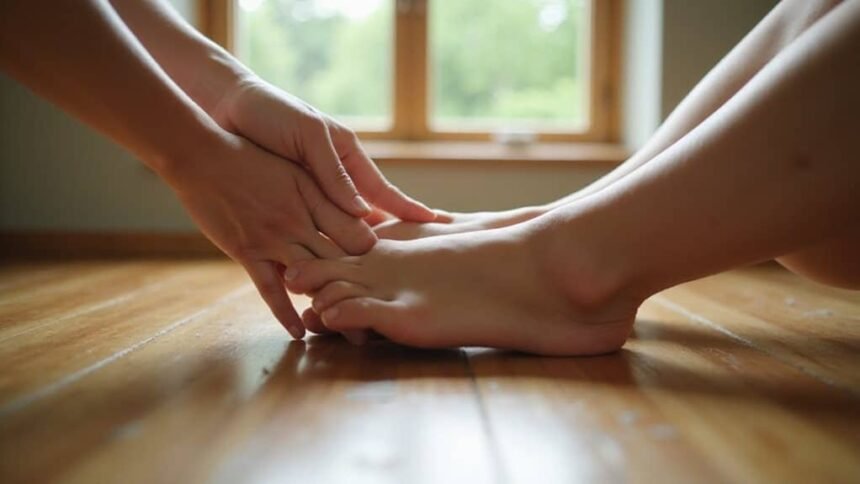
Foot pain is a common concern that can result from various causes, including overuse, poorly fitted footwear, or underlying medical conditions like plantar fasciitis or arthritis. This discomfort may interfere with daily activities, making day-to-day movement challenging. Addressing this issue proactively can help relieve tension, improve mobility, and enhance overall comfort. Here’s how massages and stretches can alleviate foot tension:
Massage Benefits
Massages provide several notable advantages for reducing foot pain and enhancing comfort. By applying targeted pressure to specific areas, massages can help relax tense muscles, improve blood flow, and promote a general sense of relief in the feet and lower limbs. Specific techniques, like kneading the sole or applying circular motions near the arch, target areas commonly affected by strain. A common way to massage the arch of your foot is with a tennis ball or frozen water bottle.
Foot massages are particularly beneficial after a long day of standing, walking, or engaging in repetitive movements that put strain on the feet. If your pain persists or worsens despite these methods, it may be time to consult a podiatrist. They offer additional treatments for pain, like:
- Restorative Cell Therapy
- Medications
- Custom Orthotics
- Corticosteroid Injections
Heat and Ice Therapy
Applying heat or ice to your feet can provide another layer of relief for managing discomfort, as heat relaxes sore muscles while ice helps to reduce inflammation. For heat therapy, use a warm towel, heating pad, or soak your feet in warm water for 15–20 minutes. This is particularly helpful if your pain results from muscle tightness or cramping, as heat improves blood flow.
Ice therapy is effective in soothing swollen or irritated areas after physical activity. Apply an ice pack wrapped in a cloth for 10–15 minutes to avoid skin irritation. Alternating between heat and ice can also be effective, depending on the cause of your discomfort.
Calf Stretches
Stretches targeting the calf muscles and Achilles tendon are another significant approach to managing discomfort in the lower legs and feet. Tight or stiff calf muscles can contribute to foot pain. The Achilles tendon and calf muscles work together to support your mobility, but overuse or lack of flexibility in these areas can lead to foot fatigue or discomfort. Regularly stretching these muscles can help prevent tension from building up and improve overall flexibility.
Standing Calf Stretches
One effective stretch involves standing a few feet away from a wall and placing your hands on its surface for support. Extend one leg back, keeping it straight while bending the front knee slightly. Press your rear heel into the floor to feel a stretch in the calf and Achilles region. Hold this position for 20–30 seconds before switching to the other leg.
For a step stretch, stand on a step or sturdy platform with your heels hanging slightly off the edge. Slowly lower your heels below the platform level until you feel a stretch in your calves. Hold for a few seconds, then return to the starting position. Both of these stretches can help improve range of motion and alleviate tightness contributing to foot discomfort.
Seated Calf Stretches
By keeping your calves limber and strong, you help to reduce strain on your feet. For a seated calf stretch, sit on the floor with your legs extended straight out in front of you. Use a towel or resistance band looped around the ball of one foot, and gently pull the ends toward you until you feel a stretch. This targets your calf while supporting the arch of your foot.
Learn More Treatments for Foot Pain
Taking an active approach to foot care can minimize everyday discomfort and improve your quality of life. Practices like foot massages, targeted calf stretches, and thermal therapy are simple yet effective ways to relieve tension and promote relaxation.
- Obligation Linéaire: Complete Guide to Meaning, Use, Finance & Law
- Tarnplanen: The Complete 2025 Guide to Smart Planning for Success
- Ryan Trahan Net Worth: Full Breakdown of His Income, Career & Success
- Serlig: Complete Guide to Meaning, Benefits, Uses, Lifestyle & Modern Wellness Approach
- Escapamento RD: Complete Guide, Performance, Types, Installation & Maintenance




Recent Comments