



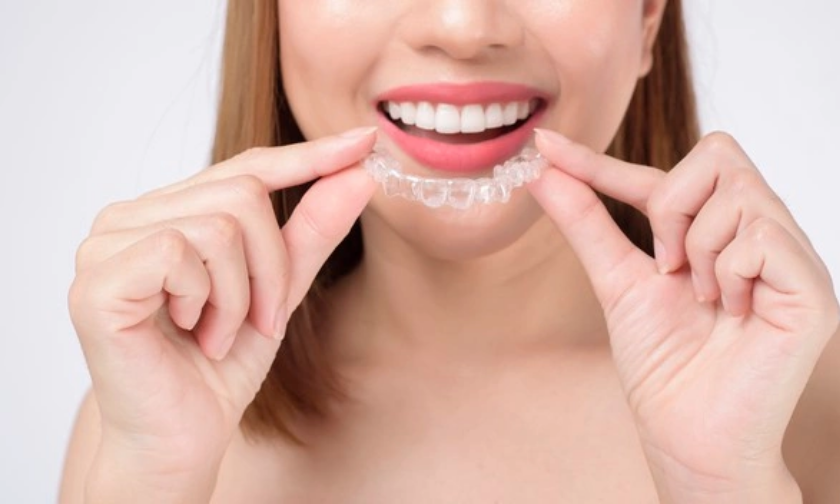
Invisalign uses a series of clear, custom-made aligners that fit over your teeth and guide them into new positions. These trays are designed through 3D scans and are replaced on a set schedule. People use this method for mild to moderate alignment needs, while braces remain helpful for more serious cases that need more precise control. Here are some advantages of Invisalign:
Less Invasive
Invisalign aligners sit smoothly against the teeth, so the soft tissues encounter fewer friction points. Follow-up appointments may also focus on quick checks rather than wire adjustments. The trays are fitted to your gum line and shaped based on scans, providing a personalized fit. You swap to a new set based on your plan, and your dentist tracks progress through periodic visits. Because the trays come off for short periods, you brush and floss as you normally do, and you return them when finished.
Clearer Look
You achieve a nearly transparent appearance with Invisalign, which may help reduce visual focus on your teeth as treatment progresses. The material is smooth and low profile. Since the trays are clear, they aim to blend with your natural tooth shade. Another benefit is that the aligners do not reflect much light. While braces provide strong, reliable control for complex movements, many adults and teens value a subtle look in social settings. Aligners sit flush, avoiding brackets or wires that might catch the eye. This approach suits those who want their orthodontic work to remain discreet while they go about their daily lives.
Removable Method
Take the aligners out for meals, which helps you avoid restrictions on crisp fruits, crusty bread, or chewy items. Place them in a case until you finish eating. Because the trays are removable, you brush and floss directly on your teeth, which supports straightforward home care. Here is a simple routine that keeps things on track:
- Rinse aligners with cool water after removal.
- Brush teeth and aligners lightly before putting trays back in.
Some patients use a mild soap to clean their trays, and they avoid hot water to protect the shape of the aligners. Manage wear time by logging hours or setting reminders, and return to your schedule after meals or sports. Braces remain a strong option for cases that require advanced tooth movements, while removable trays fit well into active daily patterns.
Try Invisalign For Your Teeth
The first step is to meet with a dental professional to confirm your fit, goals, and timeline. During this visit, they may perform a quick scan and discuss what you want to achieve with your teeth alignment. Be sure to ask about the number of aligners needed, check-in schedules, and any attachments planned. Request a written plan that outlines key milestones. Having a clear plan helps you stay on track, including knowing when to swap trays, what to monitor between visits, and how to handle travel days. If you need more control, braces can provide the stability you require. If your goals match what Invisalign offers, it provides a discreet, removable option. Schedule a consultation with your dentist, review your case, and start planning the treatment that best fits your needs today.
- Obligation Linéaire: Complete Guide to Meaning, Use, Finance & Law
- Tarnplanen: The Complete 2025 Guide to Smart Planning for Success
- Ryan Trahan Net Worth: Full Breakdown of His Income, Career & Success
- Serlig: Complete Guide to Meaning, Benefits, Uses, Lifestyle & Modern Wellness Approach
- Escapamento RD: Complete Guide, Performance, Types, Installation & Maintenance




Recent Comments